Cryogenic Storage

The cryogenic storage category features technical articles, industry guidance,
and practical insights related to the storage of liquefied gases at extremely low temperatures.
This section is designed to help engineers, buyers, and industry professionals better understand
cryogenic storage systems and their applications.

Cryogenic storage is essential for safely storing and handling liquefied gases such as
liquid nitrogen, liquid oxygen, liquid argon, and LNG. Proper storage design,
material selection, insulation methods, and safety practices play a critical role in maintaining
performance and compliance across industrial and medical environments.

Topics Covered in This Category

  • Cryogenic storage tanks and vessels
  • Cryogenic cylinders, dewars, and containers
  • Low-temperature insulation and vacuum technology
  • Cryogenic safety standards and handling procedures
  • Industrial and medical cryogenic storage applications
  • Maintenance, inspection, and lifecycle management

Browse the articles below to explore in-depth knowledge about cryogenic storage,
including equipment selection, safety considerations, and real-world applications in
industrial gas and energy systems.

Cryogenic tanks market

9 Major cryogenic tank manufacturers

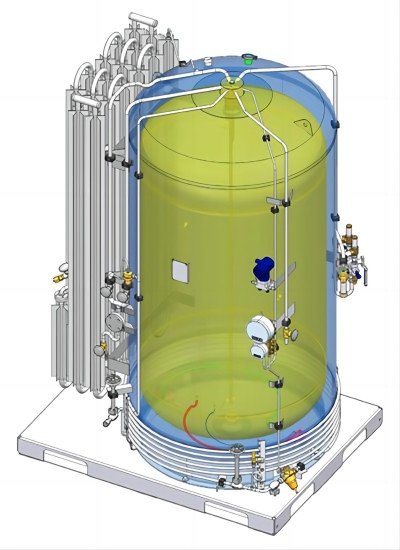
Cryogenic pressure vessels, Cryogenic storage tanks, cryo-tanks, and storage dewars all describe various containers that hold liquid such as oxygen, nitrogen, or LNG. All of these tanks, in their most basic form, hold cryogens. ... Read More
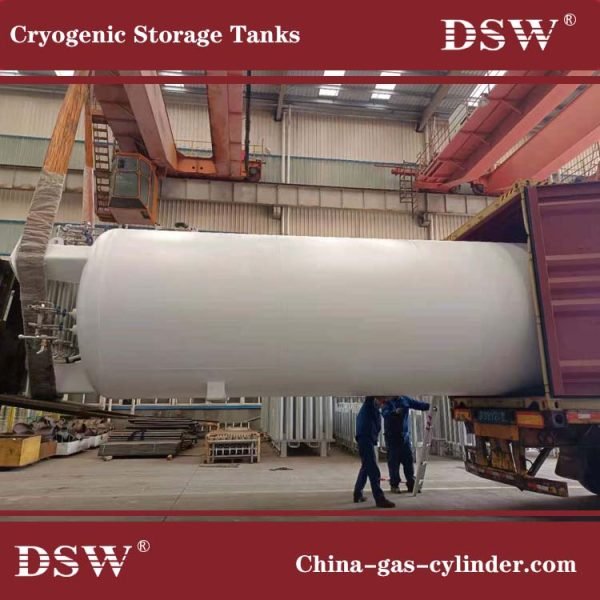
Cryogenic storage tanks used for storing liquefied gases at ultra low temperatures

What are Cryogenic Storage Tanks?

Cryogenic pressure vessels, Cryogenic storage tanks, cryo-tanks, and storage dewars all describe various containers that hold liquid such as oxygen, nitrogen, or LNG. All of these tanks, in their most basic form, hold cryogens. ... Read More
Medical oxygen cylinders

welding gas mixture

Welding gas mixture is not only a mixture of carbon dioxide and argon. 1. The advantage of Ar+He argon is that the arc combustion is very stable and the spatter is extremely small. The advantages of helium are high arc temperature, high heat input to the base metal, and fast welding speed. The advantages of both can be obtained by adding a certain amount of helium with argon as the matrix. ... Read More